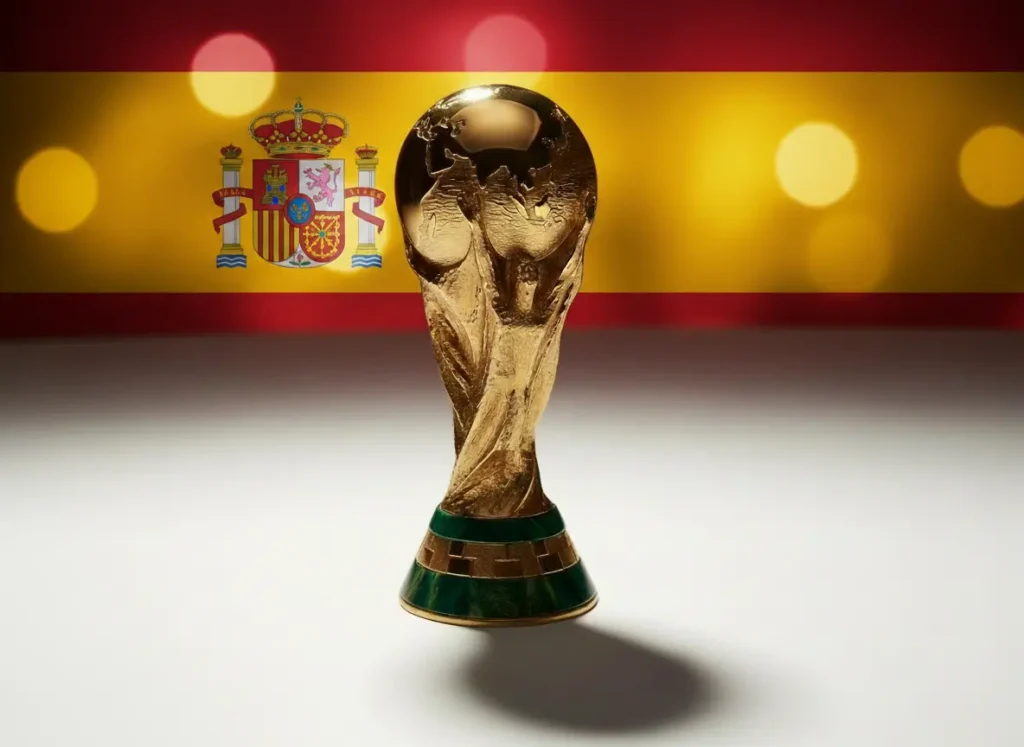
"I said Spain. Spain won. I'm going to enjoy this for exactly one paragraph before being honest about everything else." — Sorin
The 2026 FIFA World Cup is over. Spain beat Argentina 1-0 in extra time in the final at MetLife Stadium. Ferran Torres scored the only goal. And somewhere between the tears, the noise, and Messi walking off the pitch with another World Cup final loss on his record, I sat back and thought about everything I got right, everything I got wrong, and a few things nobody seemed to want to talk about. So let's do this properly.
This is the third World Cup post on this blog. I made my predictions in June and then updated them halfway through. Now comes the final verdict — part scorecard, part pure rant, part coaching lesson I didn't plan to write but couldn't avoid.
The Spain Call — Let Me Have This
Spain won. I called Spain. 2010 was their first World Cup final. 2026 was their second. Two finals, two wins — 100% win rate in World Cup finals. When Spain reach a final they do not lose. That's not luck. That's a pattern that tells you something about the kind of team they are when the stakes are highest.
Manager Luis de la Fuente entered the final having never lost a single World Cup or Euro match as manager — 13 wins and one draw before the final. Spain conceded just one goal across their entire seven-game tournament. One goal. In seven games. At a World Cup. That is unprecedented at this stage of the competition and it tells you everything about what tiki-taka, structure over chaos, and collective over individual ego actually looks like when it's executed at the highest level.
When the other team doesn't have the ball, it's very hard to beat you. It's not spectacular. It's not the kind of football that gets highlights reels on Instagram. But it works. It has always worked at the highest level and it worked again in 2026. Spain didn't beat Argentina by being more talented on paper. They beat them by being more structured, more disciplined, and more committed to a system than any individual on the pitch. As a coach, I find that more interesting than any individual moment of brilliance — and more relevant to how most of us should be thinking about our own performance.
What I Got Wrong — Germany, Holland, and the Danger of Pedigree Bias
I expected Germany and the Netherlands to go further than they did. Both went out in the Round of 32 — on the same day, in penalty shootouts, in what became one of the darkest days in the history of both programmes. Germany drew 1-1 with Paraguay after extra time and lost 4-3 on penalties. The Netherlands drew 1-1 with Morocco and lost 3-2 on penalties. Both had qualified comfortably from their groups. Both had squads on paper that suggested they should be going deep into the knockout rounds.
They didn't. And here's the coaching lesson buried in that: pedigree is not performance. History is not form. What a team has done before tells you something — but it doesn't tell you what happens when the pressure comes in this tournament, at this moment, against these opponents. I fell into the trap of weighting the name on the shirt too heavily. That's a bias worth knowing about — in football and in life. Penalty shootouts are also their own brutal lottery — both Germany and the Netherlands have been eliminated on penalties in multiple World Cups now, which starts to look less like bad luck and more like a pattern under pressure.
The teams that surprised me on the upside were more instructive than the ones that disappointed me. And none more so than Cape Verde.
Cape Verde — The Story of This Tournament
First World Cup. Never lost a game in 90 minutes throughout the entire tournament. Drew 0-0 with the future World Champions Spain — a match where their goalkeeper Vozinha became an overnight sensation. Drew 2-2 with Uruguay. Drew 0-0 with Saudi Arabia. Advanced from the group as a third-place team on goal difference.
Then in the Round of 32 they faced Argentina — the defending champions, Messi's side, a team that had won the previous World Cup and arrived in North America as one of the favourites to do it again. Cape Verde led 2-1 in the 103rd minute of extra time. Argentina had to score an own goal in the 111th minute to go through. The final score was 3-2. Cape Verde went home having scared the eventual finalists more than anyone else in the tournament.
For context: Cape Verde is an island nation with a population of around 550,000 people. They qualified for their first ever World Cup and then drew with Spain, held Uruguay, and nearly eliminated Argentina. That's not a fluke. That's a team that understood its system, trusted its structure, and executed without being intimidated by who was across from them.
Sound familiar? It's the same principle that made Spain champions.
England, France, and the Best Game Nobody Will Remember
The third-place match was a game with no stakes. England vs France. A consolation prize that neither team wanted to play. England started without Harry Kane. Without Jude Bellingham. With their backup goalkeeper.
The final score was 6-4.
England led 4-0 at half time. Declan Rice scored inside three minutes. Bukayo Saka got a hat trick. Then France came out in the second half and scored three goals in twenty minutes to make it 4-3. Mbappé scored twice, took the Golden Boot lead, and briefly made everyone watching believe that France might actually pull off the most unlikely comeback of the tournament. Then Saka scored again from the penalty spot. Then Dembélé scored to make it 6-4 in stoppage time. Then Bellingham sealed it. Ten goals. The most in any World Cup third-place match ever.
It was genuinely one of the best games of the entire tournament. And it happened in a match that theoretically meant nothing.
What does that tell you? Pride is not nothing. Even when the trophy is already gone, the best competitors find a reason to compete fully. England came without their starters and still ran France ragged for 45 minutes. France went 4-0 down and came back to 4-3. Neither team coasted. That's a mentality lesson worth more than anything I could write in a post about focus or performance.
England, Argentina, and the Paradox of Attack
England beat France 6-4 playing all-out attacking football in a game that meant nothing. In the game that actually mattered — the semifinal against Argentina — England played cautiously, and nearly lost to Mexico before that because of the same caution. They were lucky at times. The attacking identity that made them so watchable against France went missing when the pressure was highest.
This happens. The best performance often comes when the stakes feel lower — when you're not overthinking, not second-guessing, not playing not-to-lose. Playing to win looks different from playing not-to-lose, and the difference is visible in real time if you know what you're watching for.
The best defense is attack — but only if you actually commit to it. Half-measures in any direction give you the worst of both worlds. England in the third-place match committed. England against Argentina didn't. That's not a tactical observation. It's a psychological one.
Canada — Exactly What I Expected, and Exactly Right
I predicted Canada would go out in the Round of 16. They did. And I want to be clear — that is not a failure. That is an overachievement for a team of their quality, playing in their first World Cup on home soil, in front of crowds that gave them an emotional advantage that papered over some of the gaps on the pitch.
Canada reaching the Round of 16 as a host nation at their first ever World Cup is the kind of result that builds a football culture over time. The kids who watched those games in Toronto and Vancouver will be the ones representing Canada at future tournaments. That's how football grows. You don't build a football nation in one tournament — you plant seeds. Consistent structure over time is how results eventually follow.
The Final — One Goal, Extra Time, and Why It Was Always Going to Be Spain
Spain 1-0 Argentina. Ferran Torres. Extra time. That's the scoreline. But the story of the final was the same story Spain told across every game in this tournament — possession, patience, structure, and the absolute refusal to give the other team a chance to play.
Argentina had Messi. They had history. They were defending champions. They had the most electric attacking talent in the world. And they had the ball for, roughly, 34% of the match. You cannot beat Spain without the ball. Spain know this. They've built their entire identity around making it true.
Messi finished the tournament with seven goals — the Golden Boot race went to Mbappé by one goal, and only because he scored twice in a third-place match that arguably meant nothing. Messi leaves with another World Cup final loss. At 38 years old, playing his sixth World Cup, against the most disciplined team in the world, he still gave everything. That's its own kind of lesson — and a different one than the scoreline suggests.
Spain are two-time World Champions. Two finals. Two wins. The mental state required to perform at that level, in a final, with everything on the line, against opponents who want it just as badly — that's not physical. It's structural. It's the result of a system that everyone in the squad believes in so completely that individual nerves don't get a chance to take over.
I called it. I'll take it. See you at the 2030 World Cup.
Get Weekly Coaching Insights
One email every week — nutrition insights, fat loss strategies and performance tips from the coaching journal to your inbox. No filler. Just what works.
Sorin is a certified performance coach based in Canada. He writes about nutrition, fat loss and the unconscious patterns that make dietary change stick — or cause it to rebound.

What was your moment of this World Cup — the game, the goal, or the story that you'll still be talking about in ten years?
For me it's Cape Verde leading Argentina 2-1 in the 103rd minute of extra time at their first ever World Cup. What's yours? Leave a comment below — I read every one and respond personally.