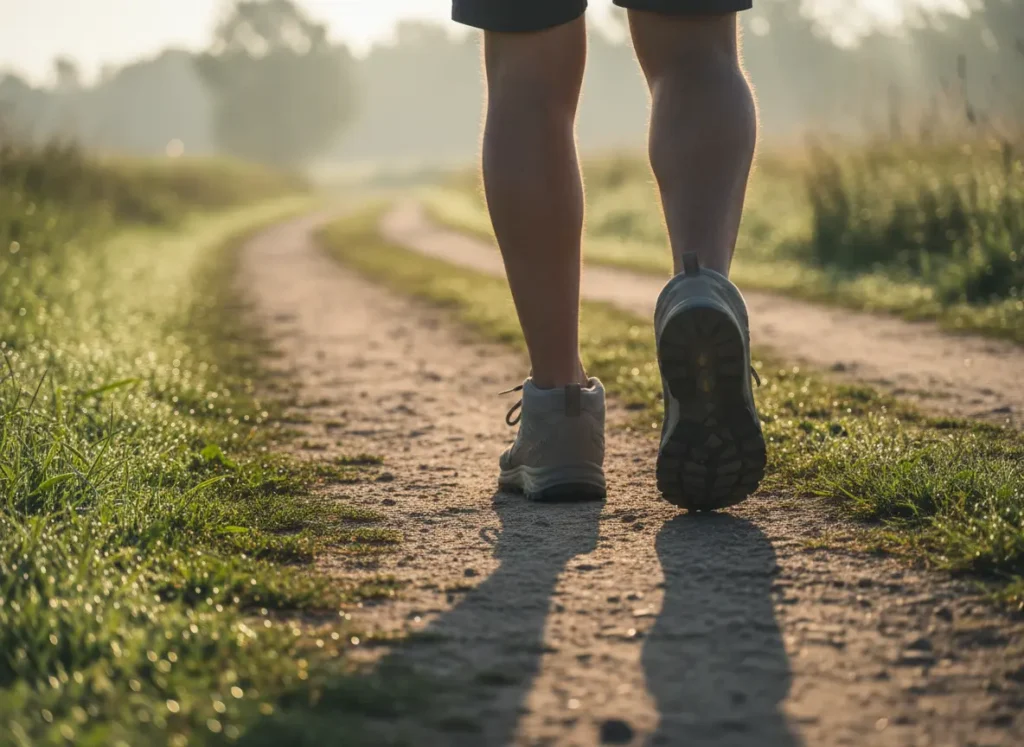
"The problem with 'just walk more' is the same as the problem with 'just eat less.' Everyone already knows. Nobody does it. The ones who do it have a system, not just an intention." — Sorin
Walking is having a moment — and not a small one. Japanese walking saw a 2,986% surge in search interest according to PureGym's 2026 fitness report, making it the fastest-growing fitness trend in the world right now. Walking yoga rose 2,414%. And sitting right in the middle of all this is the 6-6-6 walking challenge — a simple, structured routine that's racked up millions of views on TikTok and Instagram, and for once, the hype is actually backed by something real.
Here's what I want to tell you before we go any further: the reason this challenge is working for people isn't the walking. People have always known walking is good for them. The reason it's working is the structure. The specific numbers. The time-of-day anchor. The six-day commitment. These aren't arbitrary — they're doing psychological work that generic advice simply cannot do. And understanding why that matters is the difference between trying this for three days and actually building something that sticks.
What the 6-6-6 Walking Challenge Actually Is
The format is simple. Six minutes of warm-up at a relaxed but steady pace, sixty minutes of brisk walking, and six minutes of cool-down — for a total of 72 minutes of movement. Some versions of the challenge add the option of completing it at 6am or 6pm, which is where the third "6" comes in for many people, though experts advise that the time of day is less important than maintaining overall consistency.
The bulk of the session is done at a brisk pace — enough to raise the heart rate and land in what's known as Zone 2 training, a training zone that burns roughly 65% of calories from fat according to the Cleveland Clinic. That's not a trivial number. You're not just burning calories — you're burning them from the right source, without the cortisol spike and recovery cost of high-intensity training.
Walking over 3,500 steps a day has been shown repeatedly to reduce the risk of cardiovascular death and all-cause mortality. A 60-minute brisk walk easily clears that threshold and counts toward the CDC's recommendation of 150 minutes of moderate activity per week — meaning three 6-6-6 sessions covers your minimum. Six sessions nearly doubles it.
Why Walking Became a Serious Fitness Strategy in 2026
Strava's Year in Sport trend report confirmed walking as the second most popular sport globally in 2025, just behind running when it comes to total number of users recorded. That's not a fluke. It reflects a genuine shift in how people are thinking about fitness — away from the all-or-nothing intensity model that burns people out, and toward something more sustainable, more accessible, and increasingly well-supported by research.
PureGym's 2026 fitness report captured this shift clearly — Japanese walking topped the list at 2,968% search growth, followed by walking yoga at 2,414%, with incline walking also appearing in the top 20. The through-line across every walking trend is accessibility and longevity over intensity and instant results.
This matters for how you think about your own training. The case for minimum effective dose training applies equally to walking — you don't need more, you need consistent enough. Two intense gym sessions a week plus daily walking is a more sustainable and arguably more effective programme than five grinding gym sessions with sedentary days between them. Walking fills the gaps, keeps your metabolism active, and does it without tapping the recovery resources your strength training needs.
The Psychology Behind Why This Challenge Works When Generic Advice Doesn't
I want to spend some time on this because it's the part most people skip over, and it's the part that actually explains the results.
"Walk more" is advice. The 6-6-6 challenge is a system. And structure always outperforms intention when it comes to building a physical habit. Here's why:
The specificity effect. Vague goals produce vague behaviour. "Walk more" tells you nothing about when, for how long, at what intensity, or for how many days. The moment you introduce specific numbers — 6 minutes, 60 minutes, 6 minutes, 6 days — your brain has an executable instruction instead of an aspiration. Research on implementation intentions consistently shows that "I will do X at Y time on Z days" produces significantly higher follow-through than "I will try to do X."
The time anchor. Completing the challenge at 6am or 6pm isn't just aesthetic — it attaches the behaviour to an existing cue in your day. Morning or evening, you already have a transition point. Your body is already shifting states. Anchoring the walk to that transition means you're not creating a brand-new habit from scratch — you're inserting it into a groove that already exists.
The six-day commitment. Six days is long enough to feel like a real commitment but short enough to feel achievable. The same principle that explains why extreme diets fail applies here — the challenge is designed at a difficulty level that most people can actually complete. And completion matters more than perfection, because completion builds the identity: "I'm someone who does this."
The warm-up and cool-down. What experienced trainers find most valuable in the 6-6-6 structure is that it encodes the step most people skip — the transition in and out of the main effort. Six minutes of easy walking before and after is not optional padding. It's the part that makes the 60-minute middle sustainable over six days without accumulating soreness that kills the streak on day three.
This is an affiliate link. I earn a small commission if you purchase — at no extra cost to you.
How to Actually Do It — The Practical Guide
Here's the exact protocol, without any unnecessary complication:
Minutes 1–6 — Warm-up. Walk at a comfortable, easy pace. You should be able to hold a conversation without any effort. This isn't the workout — it's the transition. Let your body shift from whatever it was doing before into movement mode. If you're going out at 6am, this is especially important — joints and muscles are stiffer in the morning and need more time to mobilise.
Minutes 7–66 — Brisk walk. Pick up the pace to the point where you can still talk but you wouldn't want to — you're working. This is brisk, not strolling. You want a slight elevation in breathing. If you're tracking heart rate, aim for 50–70% of your maximum (a rough calculation: 220 minus your age). This is Zone 2. Stay here for the full 60 minutes.
Minutes 67–72 — Cool-down. Drop back to the easy pace from the warm-up. Let your heart rate come down gradually. Don't stop suddenly — the cool-down is when your body begins clearing lactate and shifting back to parasympathetic mode. Skipping it is what causes the stiffness and fatigue that makes people not want to do it again tomorrow.
Repeat for 6 consecutive days. Take one rest day. Then decide whether you want to continue as a permanent weekly routine or reset the challenge.
When to Do It — Morning vs Evening
The research on optimal exercise timing is genuinely mixed — and the honest answer is that the best time to walk is the time you'll actually do it consistently. That said, there are real physiological differences worth knowing about.
6am walking: Cortisol is naturally elevated in the morning — your body is already primed to mobilise energy. Morning walks can help regulate this cortisol spike more effectively, reduce morning anxiety, and set a positive neurological tone for the rest of the day. The effect on focus and mental clarity from a morning walk is one of the most consistently reported benefits across both research and personal accounts. The downside: joints need more warm-up time, and if you're not a morning person the barrier to entry is higher.
6pm walking: Body temperature and muscle function peak in the late afternoon and early evening, meaning physical performance is actually better at this time of day. Evening walks can also serve as a decompression ritual — a clean line between work and rest. The downside: if the walk is vigorous and close to bedtime, it can interfere with sleep onset in some people. Keep the pace moderate if you're walking within two hours of sleep.
My honest recommendation: pick the time that removes the most friction from your life. Consistency over six days matters infinitely more than whether your cortisol is slightly more or less elevated at the start.
The Japanese Walking Connection — And Why You Might Want Both
Since Japanese walking is trending alongside the 6-6-6 challenge, it's worth understanding how they relate — because they're actually solving different problems.
Japanese interval walking alternates between three minutes of fast walking at roughly 70% of maximum heart rate and three minutes of slow walking at 40%, repeated five times for a 30-minute session, four days a week. Research found that the interval group had increased muscle strength, better aerobic capacity and a significant drop in blood pressure compared to a steady-pace group.
The 6-6-6 challenge is about building a habit and achieving a steady Zone 2 fat-burning state across a long session. Japanese walking is about cardiovascular adaptation through interval stress in a shorter window. They're complementary — not competing. If you want to build the walking habit first, do the 6-6-6 challenge. Once it's embedded, consider shifting some sessions to the Japanese interval format for a different physiological stimulus.
The principle of varying training stimulus applies to walking just as much as it applies to strength training — your body adapts to whatever you do consistently, and adaptation means the stimulus becomes less effective over time. Having both tools is smarter than picking one and running it indefinitely.
What to Expect — Realistic Outcomes Over 6 Days
Let me be honest with you about what six days of walking will and won't do, because overselling this leads to the disappointment that kills habits before they have a chance to become permanent.
What will happen: Your sleep will likely improve — even moderate daily walking has a consistent effect on sleep quality. Your stress markers will drop — cortisol regulation improves with regular low-intensity movement. Your energy during the day will increase — counterintuitively, expending energy through walking produces more energy, not less. You will likely notice improvement in mood — the dopamine and serotonin effects of walking are real and measurable within days. The mental state shift from regular movement is one of the most underappreciated benefits of any exercise protocol.
What won't happen in six days: Significant fat loss. Dramatic changes in body composition. Major cardiovascular adaptation. These take weeks and months of consistency, not one six-day block. If you're weighing yourself at the end of the challenge expecting a number that matches the effort you put in, the scale will lie to you — water retention from increased activity can mask real fat loss in the short term.
The real outcome of the 6-6-6 challenge, if you complete it, is something less visible and more valuable: proof to yourself that you can build and maintain a daily movement habit. That's the foundation everything else is built on.
One Thing Most People Get Wrong
Footwear. I'm going to say it plainly because I've seen it derail people more times than any other factor — more than motivation, more than time, more than weather.
Sixty minutes of brisk walking per day, six days in a row, is a significant mechanical load on your feet, ankles, knees, and hips — especially if you're not currently active. Doing it in running shoes that aren't designed for walking gait, or in casual shoes with no support, is how you end up with plantar fasciitis, knee pain, or shin splints by day three that sideline you completely.
Get a pair of walking-specific shoes before you start. They don't need to be expensive. They need to have adequate cushioning for heel strike, support for your arch type, and a slightly flexible forefoot. Your body will thank you on day four when everyone who started in their old trainers is posting about sore feet and you're not.
Get Weekly Coaching Insights
One email every week — nutrition insights, fat loss strategies and performance tips from the coaching journal to your inbox. No filler. Just what works.
Sorin is a certified performance coach based in Canada. He writes about nutrition, fat loss and the unconscious patterns that make dietary change stick — or cause it to rebound.
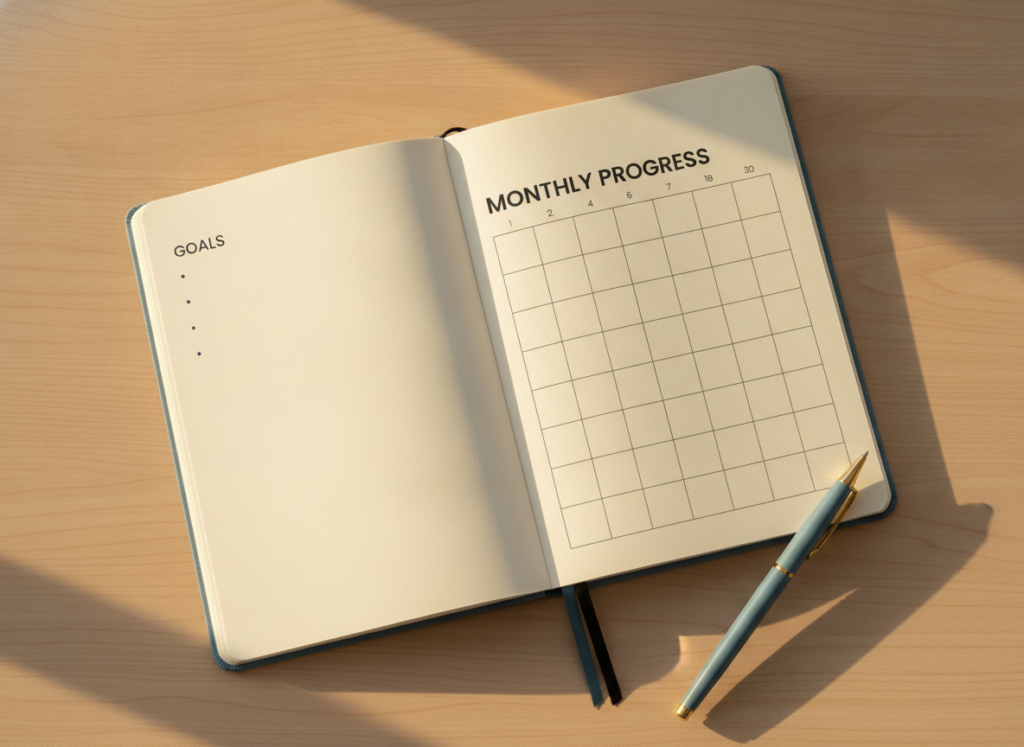

Are you going to try the 6-6-6 challenge — and if you've already done it, what actually changed for you?
I'm genuinely curious whether people are finding the morning or evening timing more sustainable, and whether the structure is what's making the difference or whether it's something else entirely. If you've done a walking challenge of any kind and have a real result to report — or a reason it didn't work — leave a comment below. I read every one and respond personally.